

Deciding if an Expense is an Emergency
Emergency savings are designed to give you money to fall back on when something unexpected goes wrong. That could include a broken boiler, a car breakdown or another cost that your normal monthly budget was not designed to absorb.
However, not every unexpected bill is automatically an emergency. Something can surprise you without being essential, while a necessary expense may have been predictable enough to plan for in advance.
A useful way to make the distinction is to consider necessity, urgency and predictability together. The purpose is not to create a rigid set of rules for when you are allowed to use your own money. It is to help protect emergency savings for situations where having accessible money can make a meaningful difference.
A useful test for an emergency expense
There is no single test that covers every situation, but three questions can help you decide whether an expense belongs in your emergency budget.
-
Is it necessary?
Consider whether the cost deals with something you genuinely need rather than something you would simply prefer to buy, replace or improve.
-
Does it need dealing with soon?
Ask what is likely to happen if you postpone the expense. A necessary cost becomes more urgent when delaying it could create a serious practical, financial or safety problem.
-
Was it genuinely unplanned?
Consider whether the expense arose unexpectedly or whether it was a cost you could reasonably have expected and prepared for through your normal budget or separate savings.
An expense has a stronger claim to being an emergency when it is necessary, time-sensitive and genuinely unplanned. You still need to consider your own circumstances rather than relying on the category of expense alone.
Necessary Means There Is a Real Consequence to Doing Nothing
One of the first questions to ask is whether the expense deals with a genuine need.
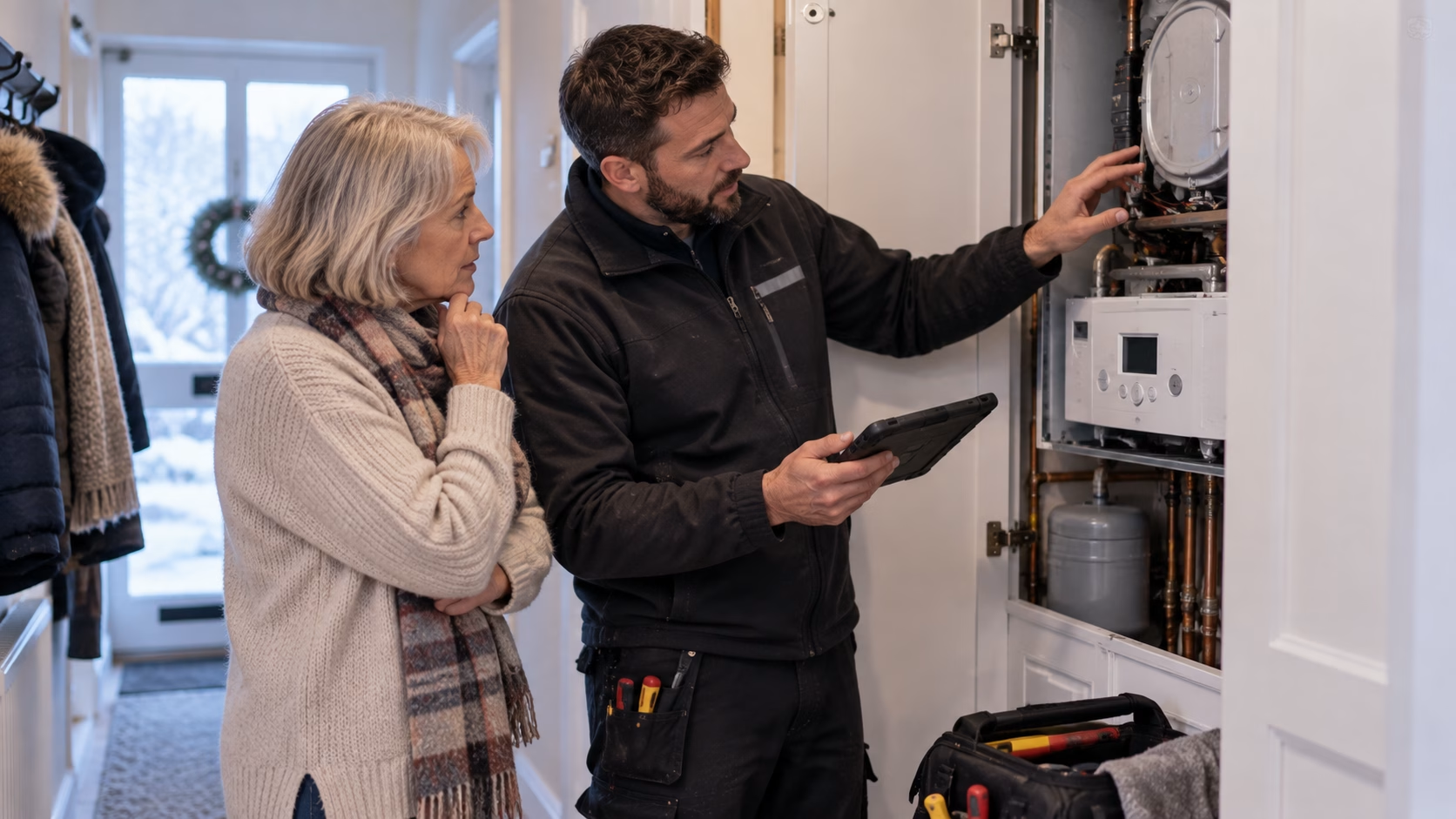
For example, repairing a broken boiler during cold weather could be necessary because your home needs heating and hot water. Replacing a fridge that has stopped working may also be difficult to avoid because you need somewhere safe to store food.
The same principle can apply outside the home. If your car suddenly needs a repair and you rely on it to get to work, leaving the problem unresolved could affect your ability to earn an income. Urgent dental treatment may be another example where postponing the cost is not a realistic option.
This is different from spending that would be useful or enjoyable but is not genuinely necessary. Replacing a working television with a newer model, upgrading a phone that still works or redecorating a room because you would like a change would not normally become emergencies simply because you want to deal with them now.
The distinction is not always perfectly clear. What matters is the consequence of not spending the money, rather than how strongly you would prefer to make the purchase.
An Emergency Usually Cannot Reasonably Wait
Necessity on its own does not always make an expense an emergency. Timing matters too.
Many things eventually need repairing, replacing or paying for. If you have enough time to prepare for the cost without creating a significant problem, it may be better treated as a future expense rather than an immediate emergency.
Needs dealing with now
A tyre is found to be unsafe and the car should not be driven until it is replaced. If you rely on the vehicle, the cost may require immediate attention.
Necessary, but can be planned
You know your tyres are wearing down and are likely to need replacing later in the year. The cost is necessary, but there is time to start putting money aside for it.
The type of expense can be identical while the financial situation is different. Urgency can help determine whether emergency savings are appropriate.
Asking what would happen if you waited can help. If delaying the expense could leave your home unsafe, prevent you from working or allow an important problem to become substantially worse, there may be a strong reason to deal with it quickly.
If postponing the cost for a few weeks or months has little meaningful consequence, you may have time to budget or save for it instead.
Unexpected Does Not Automatically Mean an Emergency
Emergency funds are intended for unexpected costs, but the word unexpected needs some care. There is a difference between an expense being genuinely difficult to foresee and simply not having prepared for something you knew would eventually happen.
Christmas, birthdays, annual insurance premiums and routine car servicing are examples of costs that can place significant pressure on a particular month’s finances. Their size does not automatically make them emergencies, because there is usually an opportunity to prepare for them.
This distinction becomes easier once predictable irregular costs have their own place in your budget. A sinking fund, for example, allows you to gradually put money aside for a cost you know is coming rather than relying on your emergency fund when the bill arrives.
Some Expenses Depend on Your Circumstances
Lists of supposed emergency expenses can be useful for examples, but they can also be misleading. The same event can have very different consequences for different people.
A broken car is a good example. It sounds like an obvious emergency, but whether the repair needs to come from emergency savings can depend on how important the car is to your everyday life and what alternatives you have.
Your circumstances can affect whether an unexpected cost needs immediate attention.
Your car breaks down unexpectedly and you cannot reasonably get to work without it. A necessary repair may have a strong claim on your emergency savings because delaying it could affect your income.
Your car breaks down, but you can use another household vehicle or suitable public transport for the time being. The repair still matters, but you may have more time to plan how to pay for it.
A laptop fails unexpectedly and you depend on it to carry out paid work. Replacing or repairing it quickly could be necessary to protect your ability to earn.
The same failure may be inconvenient rather than financially urgent if the laptop is mainly used for entertainment and you can reasonably wait before replacing it.
The same expense can have a different impact
The car is essential for work
You have a practical alternative
The laptop is essential for earning
The laptop is mainly recreational
This is why an emergency fund should not be governed by a universal list of approved purchases. Housing, work, health, caring responsibilities, transport and the alternatives available to you can all change the consequences of an expense.
The better question is what the expense means in your particular circumstances.
What Usually Does Not Count as an Emergency Expense?
Some types of spending will usually have a weaker claim on emergency savings because they are optional, predictable or can reasonably be postponed.
Examples can include routine annual bills, holidays, gifts, non-essential home improvements, replacing something that still works and buying something primarily because it is discounted. Ordinary overspending during the month would not normally become an emergency expense simply because there is not enough money left in the current account afterwards.
Routine maintenance also deserves some thought. Maintaining a car or home can be necessary, but many maintenance costs become reasonably predictable over time. An annual boiler service is different from an unexpected boiler breakdown, just as a planned car service is different from a sudden mechanical failure.
There will always be exceptions. A planned expense can become more urgent because circumstances change, while something that is an emergency for one household may be manageable without emergency savings for another.
The purpose of distinguishing between them is not to make you feel guilty about spending. It is to stop predictable and discretionary costs gradually using up money that you intended to protect you against events you could not reasonably plan for.
What If You Are Not Sure Whether to Use Your Emergency Fund?
Some expenses will sit in a grey area. When that happens, return to the three questions rather than trying to find the expense on a definitive list.
Ask whether the cost is genuinely necessary, what would happen if you delayed it and whether you could reasonably have prepared for it. You can also consider whether another source of money has already been set aside for the same purpose.
If the expense is optional and can wait, there may be little reason to use emergency savings immediately. If it is predictable but you have not yet saved enough for it, you may need to deal with the immediate situation while also changing how you prepare for the same cost next time.
If it is genuinely unexpected, necessary and difficult to postpone, that is much closer to the purpose for which an emergency fund exists.
The related guide When Should You Use Your Emergency Fund? looks more broadly at the decision to take money from the fund once an unexpected financial problem occurs.
Plan Separately for Costs You Know Will Eventually Arrive
One way to protect your emergency fund is to gradually remove predictable expenses from the jobs it is expected to do.
Suppose your car insurance is paid annually. You may not know exactly what next year’s premium will be, but you know that another insurance bill is likely to arrive. Putting money aside gradually gives you a separate source from which to meet that cost.
The same approach can be used for annual bills, routine maintenance, celebrations and other expenses that do not occur every month but are still reasonably foreseeable.
You cannot plan precisely for everything. A car that is serviced regularly can still break down unexpectedly, and a well-maintained home can still develop an urgent problem. The aim is not to predict every possible cost. It is to stop expenses you already know about competing unnecessarily with the money reserved for genuine surprises.
Emergency Fund vs Sinking Fund explains the distinction in more detail and how the two types of savings can work alongside each other.
Conclusion
An emergency expense is not simply any bill that arrives unexpectedly or any cost that feels important. A useful test is whether the expense is necessary, difficult to postpone and genuinely unplanned.
Your circumstances matter too. A car repair, replacement appliance or broken laptop may be an emergency for one person and a cost that another person can reasonably delay. Looking at the consequences of waiting can often make that distinction clearer.
Predictable irregular expenses are different. Preparing separately for costs you know are likely to arrive can leave your emergency savings available for the situations that are much harder to foresee.
There will always be grey areas, so the aim is not to create rigid rules about when you are allowed to use your savings. It is to give emergency money a clear purpose and a practical framework for deciding when an expense genuinely fits it.