

When recent performance changes how an investment feels
Buying after prices have risen and selling after they have fallen can appear contradictory. An investor is paying more after a period of gains, then potentially accepting a lower price after a period of losses.
Yet this pattern can develop because investment decisions are not made with knowledge of what prices will do next. Investors see what has already happened, encounter changing news and opinions, and make decisions while the future remains uncertain.
Recent performance can also change how an investment feels. Rising prices may increase confidence that an investment is performing well and make further gains seem increasingly plausible. Falling prices can have the opposite effect, making risks that previously seemed manageable feel much more immediate.
The result is that enthusiasm can increase after prices have risen, while fear can increase after they have fallen. If those changing feelings begin driving decisions, an investor can end up buying after substantial gains and selling after substantial losses.
Why can rising prices encourage investors to buy?
A sustained rise in an investment can provide several forms of positive reinforcement at the same time. The investment is producing visible gains, news about its performance may become more positive and other investors may appear increasingly interested in it.
Past gains can then begin to influence expectations about future returns. An investment that once seemed uncertain may feel more convincing after its price has risen, even though the higher price itself does not guarantee that further gains will follow.
There can also be a social element. Seeing other investors benefit from rising prices may increase the feeling that an opportunity is being missed. Waiting can become increasingly uncomfortable if prices continue climbing while someone remains outside the investment.
This can contribute to performance chasing, where recent strong performance attracts investment partly because that performance has already occurred. The full behaviour deserves separate treatment, but its relevance here is straightforward: a rising price can itself make an investment more attractive to some investors.
None of this means that buying an investment after its price has risen is inherently irrational. New information can genuinely improve expectations for an investment. The behavioural issue arises when recent price performance starts becoming evidence, in the investor’s mind, that similar performance is likely to continue.
Why can falling prices encourage investors to sell?
The emotional environment can change quickly when prices begin falling. Gains that previously created confidence may shrink or disappear, while losses become visible in the value of the portfolio.
Attention can then shift from the possibility of future gains to the possibility of further losses. A fall that has already happened may make another fall feel increasingly likely, even though the next market movement remains uncertain.
Selling can appear to provide a way to stop that uncertainty. Once the money is no longer exposed to the investment, further falls in its price no longer reduce the value of that holding. This can make taking action feel more comfortable than continuing to watch the investment fluctuate.
Our guide to why investors panic when markets fall explores this response in more detail. Visible losses, uncertainty, negative information and the behaviour of other investors can combine to create powerful pressure to act.
Again, selling after a fall is not automatically an emotional mistake. A price decline can accompany genuinely important new information about an investment. What matters for the behavioural pattern is whether the fall itself changes the investor’s expectations about what is likely to happen next.
How buying high and selling low can become a cycle
The buying and selling decisions become particularly important when they are viewed together rather than separately.
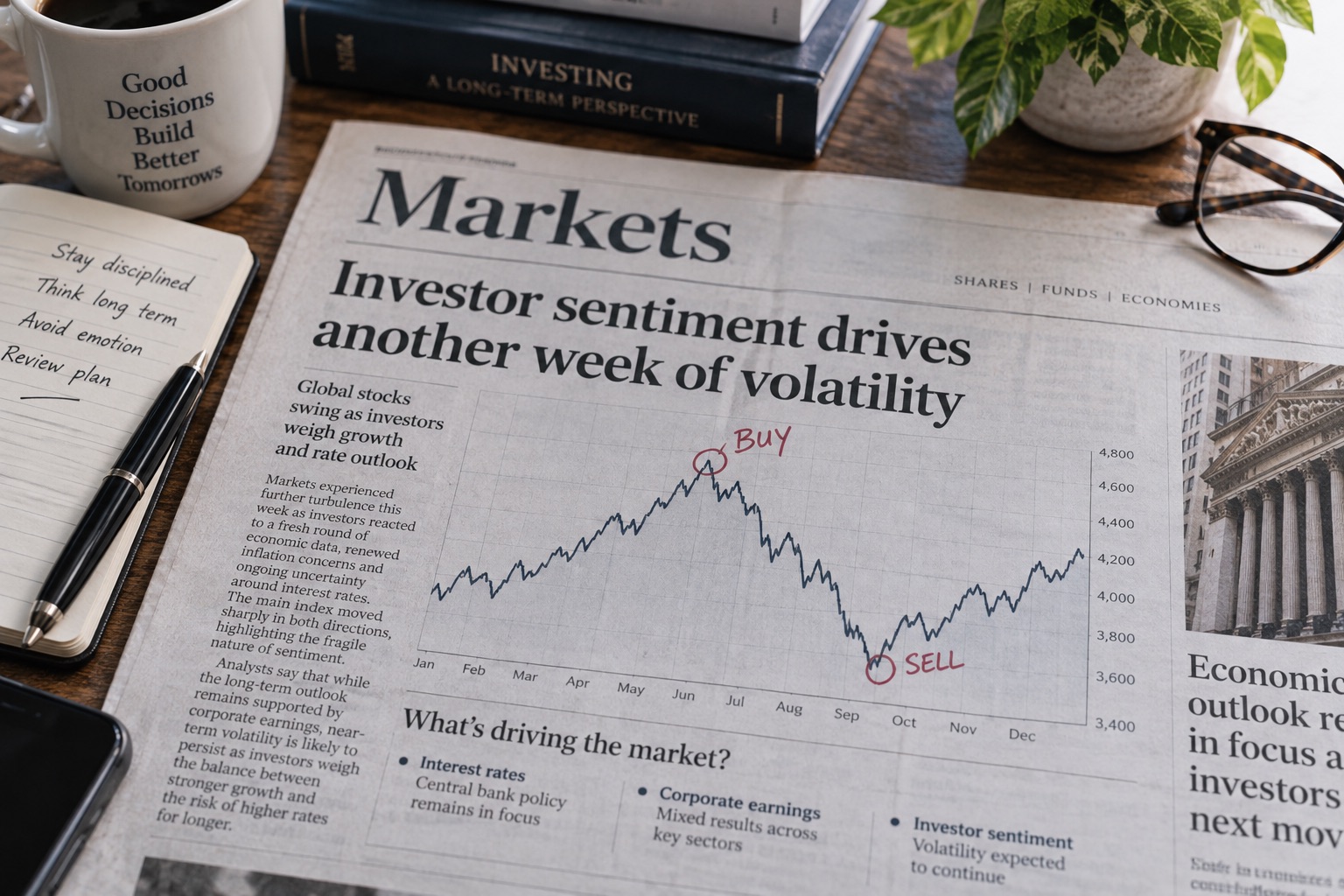
Imagine an investor watching an investment rise over an extended period. At first they are uncertain, but continued gains gradually increase their confidence. Eventually, after much of the rise has already occurred, they decide to invest.
If the market subsequently reverses, the experience changes. The investor sees the value of the investment falling and becomes increasingly concerned that the decline will continue. After a substantial fall, they sell.
The investor may then remain outside the market because the same uncertainty that encouraged the sale has not disappeared. If prices eventually begin rising again, the initial recovery may not immediately feel convincing. Confidence may return only after further gains have already occurred.
At that point, the conditions that encouraged the original purchase begin appearing again. Recent performance is positive, the investment feels more attractive and the fear of missing further gains can increase.
The cycle can therefore look like this: rising prices increase confidence, confidence encourages buying, falling prices increase fear, fear encourages selling, and a later period of rising prices gradually rebuilds confidence.
The problem is not simply that the investor bought at one price and sold at another. It is that their willingness to own the investment may have increased after prices rose and decreased after prices fell. Their perception of the opportunity moved partly in response to the very price movements they were trying to navigate.
If buying and selling are also intended to anticipate future market movements, another difficulty appears. Leaving the market creates a later decision about when to return. Our guide to time in the market versus timing the market explains why successfully moving in and out of markets requires more than recognising that a fall has occurred.
Why the same investment can look different after its price changes
One reason this cycle is difficult to recognise is that an investment can genuinely seem different after a substantial price movement.
Consider an investment that has risen strongly for several months. Positive performance may be accompanied by optimistic forecasts, favourable news and stories about investors who have already made substantial gains. The investment can appear increasingly successful because much of the information surrounding it is now positive.
After a substantial fall, the information environment may look very different. Attention may focus on losses, disappointing developments and reasons prices could fall further. The same investment that previously appeared attractive can now feel considerably more dangerous.
Some of that change may be justified. Markets respond to new information, and a price fall can occur because expectations about an investment have genuinely deteriorated. Equally, a price rise can reflect improvements in the underlying investment.
But price and investment quality are not the same thing. A rising price does not by itself demonstrate that an investment has become safer or that it will continue rising. A falling price does not by itself demonstrate that further losses will follow.
Separating those two questions can therefore be useful when understanding investor behaviour: what has changed about the investment, and what has changed because its price moved?
Is buying after a rise or selling after a fall always a mistake?
No. The phrase “buy high and sell low” describes a potentially damaging behavioural pattern, but the sequence of prices alone cannot tell us whether an investment decision was reasonable.
An investor might buy after a rise because new information has materially improved their assessment of an investment. Someone else might sell after a fall because their circumstances have changed or because the reasons they originally held the investment no longer apply.
Portfolio decisions can also produce purchases and sales after prices have moved without relying on a prediction about where prices will go next. Rebalancing, for example, can involve changing holdings because the proportions within a portfolio have moved away from their intended allocation.
The distinction is therefore about the reasoning behind the decision rather than whether the latest price movement was up or down.
Recognising when recent performance is influencing a decision
Recent performance will naturally form part of the information an investor sees. The aim is not to pretend that price movements have no relevance, but to distinguish information from the reaction that information creates.
One useful distinction is between asking what has actually changed and noticing how the investment now feels. If confidence has increased mainly because the price has risen, or concern has increased mainly because the price has fallen, recent performance may be having a stronger influence on the decision than it first appears.
The same distinction can be applied to expectations. A period of strong performance can make continued gains easier to imagine, while a sustained fall can make further losses easier to imagine. Neither feeling establishes what the market will do next.
This is part of the broader subject of emotional investing. Emotions do not have to be dramatic to affect decisions. Changes in confidence, comfort, urgency and perceived risk can influence how the same information is interpreted.
Understanding the pattern does not provide a way to predict markets. Instead, it helps explain why investor behaviour can sometimes follow recent performance: enthusiasm builds as prices rise, while willingness to remain invested can weaken after prices fall.
Conclusion
Investors can buy high and sell low because recent market performance affects more than the value of an investment. It can also change confidence, expectations and perceptions of risk.
Rising prices can make an investment appear increasingly attractive and create concern about missing further gains. Falling prices can make losses more visible, increase uncertainty and create pressure to prevent further damage. When these reactions occur one after another, an investor’s willingness to buy can be strongest after prices have risen and their willingness to sell strongest after prices have fallen.
Buying after a rise or selling after a fall is not inherently a mistake. What matters is whether something relevant has changed or whether the recent price movement itself is shaping expectations about what will happen next. Recognising that distinction helps explain one of the most persistent patterns in investor behaviour.


